01How the Arcana Compatibility Calculator Works
The Arcana Compatibility Calculator accepts two birth dates for any relationship: friends, relatives, colleagues, collaborators, or romantic partners. It calculates one Major Arcana card for each person by adding all digits in the date and reducing totals above 22. For example, 15/05/1990 totals 30, then 3: The Empress. The result displays both number paths before it interprets the interaction, making the calculation reproducible without a name, account, email, or hidden model.
After finding the cards, the tool measures their shortest distance around a 22-card cycle and applies a small elemental modifier. That produces a bounded symbolic index from 48 through 96 plus a reading about communication, complementary capacities, likely friction, and a question to discuss. The same two dates always return the same result under this method. Repeatability explains the mechanics; it does not transform the index into social science or a prediction.
02What Arcana Compatibility Means
Compatibility here means a structured way to compare two archetypes, not a judgment about whether two people belong together. A Magician and Chariot pairing might invite discussion of initiative and pace. A Hermit and Sun pairing might highlight different preferences for solitude and visible exchange. The cards help name a possible translation task; they cannot know the history, culture, roles, power differences, or circumstances that shape a real relationship.
Read both individual cards before looking at the index. Each person should decide whether their interpretation fits rather than having it assigned to them. Then replace symbolic nouns with observable behavior. “The Emperor needs structure” becomes useful when it means setting an agenda, defining a deadline, or agreeing who makes a particular decision. “The Fool needs freedom” might mean preserving choice within the same agreement. Specific language lets people negotiate; labels often close the conversation.
This page is broad by design. It avoids assuming romance so its prompts can apply to a sibling, friend, teammate, manager, creative partner, or spouse. For two romantic partners who want language about affection, intimacy, and repair without centering a percentage, use the Couple Arcana Calculator. Neither page ranks people or measures worth. The best evidence of compatibility remains what people do together over time.
03Compatibility Themes Across the 22 Major Arcana Cards
The map below gives each Major Arcana card one collaboration-oriented theme. These tags do not assign a score on their own and are not fixed personality types. Active coordination can become domination, patient listening can become avoidance, and flexible experimentation can become unreliability. The longer result describes both cards together, while the map provides a concise vocabulary for discussing what each person may contribute or need.
The numbering convention matters: this project maps Strength to 8, Justice to 11, and The Fool to birth number 22. Another site may use different reductions or label The Fool 0. When results disagree, compare the method and card order before assuming that one interpretation is more accurate.
- 1 · The Magicianactive coordination
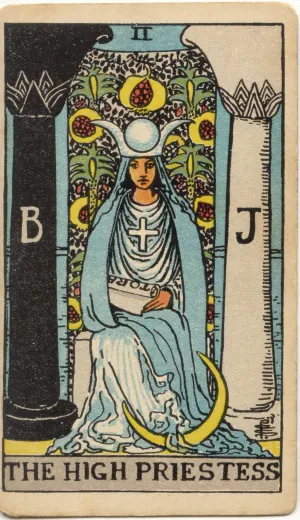
- 2 · The High Priestesspatient listening
- 3 · The Empresssupportive growth
- 4 · The Emperorreliable planning
- 5 · The Hierophantcommon standards
- 6 · The Lovershonest alignment
- 7 · The Chariotcoordinated action
- 8 · Strengthcalm resilience
- 9 · The Hermitrespectful autonomy
- 10 · Wheel of Fortuneshared adaptability
- 11 · Justicebalanced exchange
- 12 · The Hanged Manpatient reconsideration
- 13 · Deathadaptive change
- 14 · Temperancemeasured collaboration
- 15 · The Devilclear boundaries
- 16 · The Towerconstructive reset
- 17 · The Stargenerous encouragement
- 18 · The Moonclarified signals
- 19 · The Sunshared optimism
- 20 · Judgementaccountable review
- 21 · The Worldwhole-system thinking
- 22 · The Foolcurious flexibility
04How to Use Your Compatibility Result
Choose a real interaction rather than evaluating the relationship in general. Each person can name one part of the reading that seems useful, one part that does not fit, and one recent example. Ask where coordination felt easy and where a request was misunderstood. If only one person is present, write your observations as tentative questions rather than claims about the other person's hidden motives.
Turn one theme into a reversible experiment. Colleagues might clarify who owns a deliverable and when feedback is due. Friends might agree whether a difficult conversation needs advice, listening, or space. Family members might state a boundary in behavioral terms. Creative partners might divide exploration from final decision-making. Review the experiment after an actual interaction; do not treat a high index as permission to skip communication or a lower one as a reason to give up.
A shared link includes both complete birth dates, so obtain permission before copying or posting it. Never use the percentage to screen an applicant, assign work, diagnose a relative, justify control, or make a decision about safety, health, money, or legal matters. Where a relationship involves coercion, discrimination, fear, or harm, use appropriate professional, organizational, or community support. This tool is for reflection and entertainment.
05The Compatibility Formula, Shown Plainly
Let a and b be the two card numbers. Their circular distance is d = min(|a − b|, 22 − |a − b|), which treats the Major Arcana sequence as a cycle. The index is clamp(48, 96, 91 − 3d + element bonus). The bonus is 9 when the assigned elements match and 3 when they differ. Clamping means no result falls below 48 or above 96. Publishing the equation lets anyone reproduce the displayed number and see exactly which assumptions shaped it.
The formula is intentionally simple and editorial. Its percentage sign is not a probability, and the element assignment is not validated relationship research. A nearby number can represent familiar language; a distant number can suggest a productive contrast. Neither is automatically better. Treat the index as a visual entry point to the written reading, then give observed behavior, consent, reliability, and context far more weight.